
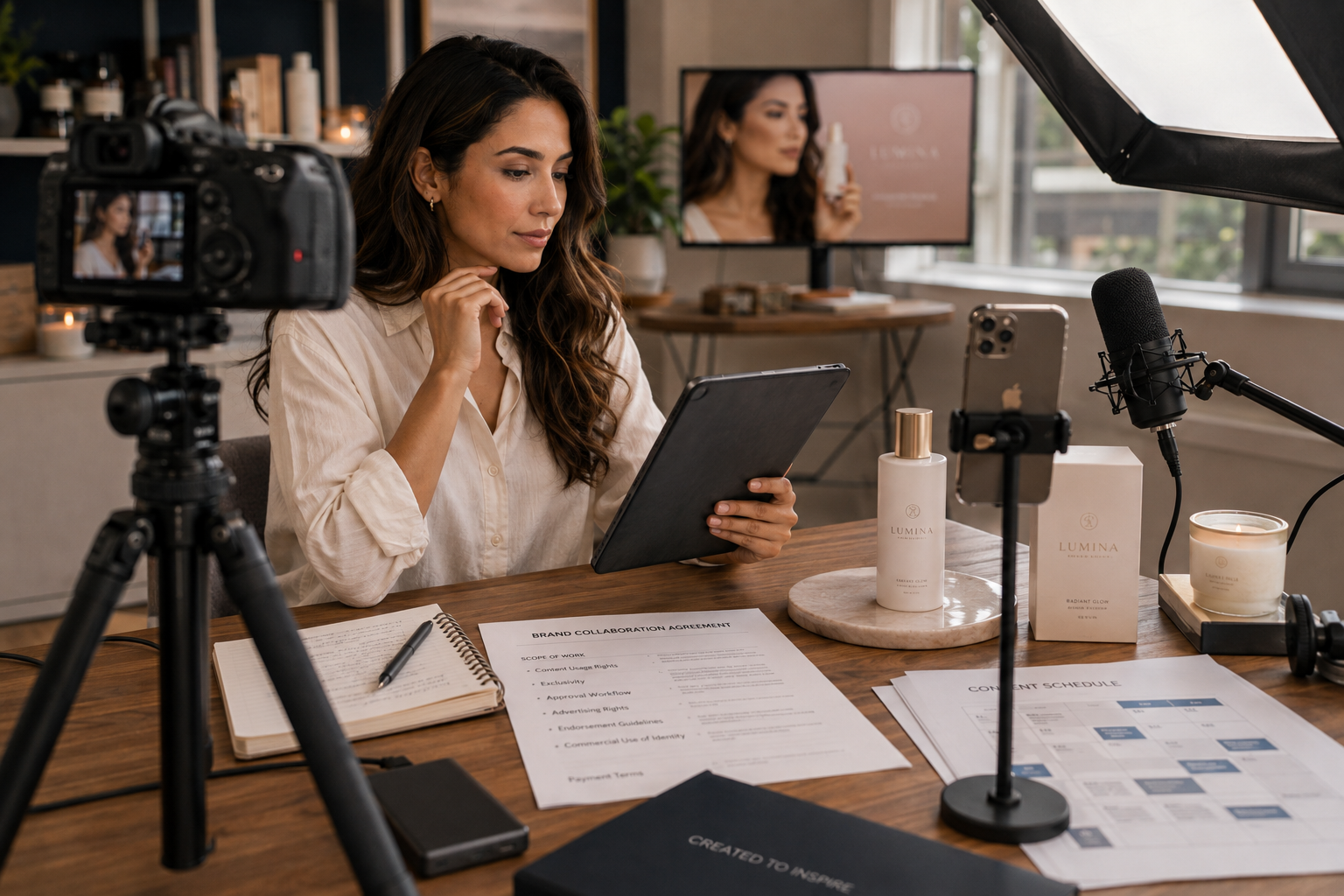
Nobody starts a channel thinking about what type of LLC or Corporation you’re going to use. You post from a personal account, and things grow. A year in, there’s an editor getting paid every month, a sponsorship offer sitting in the inbox, maybe a merch line and an email list. At that point, the legal questions already exist, whether or not anyone has thought about them. Who owns the content? What do the contracts actually say? And who holds the login credentials to the accounts the whole thing runs on?
None of this post is meant to scare, overwhelm you, or shy you away from creating great content that hopefully millions will flock to, it’s more to get you to start thinking about being proactive about protecting yourself and some of the formalities that come with a stable business and brand plan.
Being proactive from the perspective of legal advice is far more economical than waiting for a problem to arise. The most cost-effective legal advice is the kind that arrives early, when the business can still be structured properly, the brand locked down, and the expensive mistakes avoided altogether. Rights and revenue built over years can vanish over a clause nobody read. Companies will spend far more money fixing problems that escalate down the road rather than setting things up properly the first time around.
1. Set Up the Business Properly
Start with a basic question: do the contracts, the income, the expenses, and the intellectual property belong to you personally, or to a business entity, is that arrangement in a signed writing/ contract? Either answer can work. What causes trouble is inconsistency. The bank accounts, invoices, sponsorship agreements, and ownership records all need to tell the same story.
Here’s the pattern attorneys see constantly: someone forms an LLC, feels responsible, and then keeps signing deals in their own name and depositing brand payments into a personal checking account. On paper there’s a company. In practice there isn’t. The day a dispute, a sale, or an insurance claim shows up, that gap becomes expensive. Insurance itself is worth a conversation too, whether that means media liability, cyber, equipment, or plain general liability coverage.
2. Establish Who Controls the Accounts and Digital Assets
For most creators, the channel is the single most valuable thing they own. Yet access to it often rests on nothing more formal than habit. Somebody set up the account years ago, somebody else knows the password, and nobody has written any of it down.
Take a real scenario: a manager opens the YouTube account under the manager’s personal email. The relationship sours. Suddenly the creator learns that recovery emails, verification codes, everything, route to a person who no longer takes their calls. Documenting who owns each account, domain, handle, subscriber list, and recovery credential prevents this, and written access rules can cover the uncomfortable scenarios people avoid discussing: termination, disability, death, or a sale of the business.
3. Clear and Protect the Brand
Before real money goes into a channel name, podcast title, slogan, logo, or merch brand, run a search. We’re not talking about a simple Google search, or AI search, but instead a tiered structured professional search. The domain being available means almost nothing. So does the handle. Someone can still hold earlier trademark rights in that name, and their rights beat your registration date on Instagram every time. The USPTO’s database is the starting point, though a genuine knockout search and analysis performed by a licensed trademark attorney is thousands of times better.
Picture spending two years building a podcast audience, then opening a demand letter from a company that registered a similar mark. A potential lawsuit has entered the chat…it happens. An attorney can assess the usage risk up front, tell you what’s actually worth registering, and plan ahead for impersonators, counterfeit merch, and infringers.
4. Pin Down Who Owns the Content
Paying for something and owning its copyright are two different things. That surprises people. The freelancer who cut your video, shot your photos, or composed your intro music may still own that work unless a written agreement says otherwise. Contracts with collaborators need to cover assignment of rights, work-made-for-hire language where it actually fits, reuse, raw files, credit, and any revenue split. And be careful with work-made-for-hire as a concept. The doctrine applies in narrow circumstances, and treating it as a magic phrase instead of getting a clear written assignment is a mistake.
Think about the editor who builds a distinctive intro sequence used in every single video. No ownership language in the agreement? Now there’s a genuine question about whether those videos can stay up after the relationship ends. Depending on the content, guest releases, location releases, and releases for minors may need to be in the file before anything gets published.
5. Obtain the Right Licenses
Music, stock clips, photos, gameplay footage, fonts, graphics. Third-party material is everywhere in creator content, and every piece of it arrives with terms attached. The catch is that a license rarely covers everything. It might permit one platform but not another, organic posts but not ads, one country but not worldwide, a year but not forever.
The song you licensed for a regular post may be completely off-limits the moment a sponsor pays for that post. Read the license against the actual plan. And keep the records organized, because when a platform pulls content or demands proof of permission, “I bought it somewhere in 2023” is not an answer.
6. Negotiate More Than the Sponsorship Fee
Deliverables, deadlines, payment terms, approvals, revisions, cancellation. Those are the parts of a brand agreement everyone remembers to discuss, and honestly, they’re the easy part. The dangerous clauses hide elsewhere: exclusivity, indemnity, morality provisions, claw backs, takedown rights, and how the brand gets to use your name, likeness, and content.
Consider what perpetual usage rights actually mean. You accept a fair fee for one video, and three years later that video is still running as a paid ad for the brand, with your face on it, and you’re not owed another dollar. Whitelisting and paid-media rights deserve real scrutiny for the same reason. They hand the brand direct control over how your identity shows up in advertising.
7. Comply With Advertising and Endorsement Rules
If money, free product, affiliate commissions, or any other material connection sits behind a post, viewers need to see the disclosure where they’ll actually notice it. Burying “#ad” below the fold of a caption, or mentioning partnerships only on the profile page, doesn’t cut it. The FTC’s position is straightforward: put the disclosure with the endorsement itself, somewhere hard to miss.
Claims are the other tripwire. There’s a difference between “I love this protein powder” and “this protein powder builds muscle twice as fast,” and the second one needs substantiation. Health, financial, and performance claims deserve legal review before they go live, ideally through a repeatable process rather than one-off panic checks.
8. Understand Platform Rules and Prepare for Account Problems
YouTube’s rules aren’t TikTok’s rules, and TikTok’s aren’t Twitch’s rules. Advertising, music, monetization, fake engagement, age restrictions, synthetic media: each platform draws its own lines. Two disclosure requirements catch creators off guard most often: paid-promotion labels and AI-content labels. YouTube, to take one example, requires creators to flag paid promotions and to disclose realistic content that’s been meaningfully altered or AI-generated.
Then there’s the emergency scenario. Your main account gets suspended in the middle of a product launch, and overnight you’ve lost the audience and the campaign revenue at the same time. A written response plan should exist before that day: how to handle strikes, takedowns, impersonation, demonetization, account recovery, who the backup administrators are, and what records get preserved. What will you do when the take-down and put back process fails and your main revenue driver is suspended? Have you diversified your streams of income so if anyone gets taken away you can keep paying the bills while you fight to get it reinstated.
9. Handle Audience Data With Care
Run a website, a mailing list, an app, a membership, or a giveaway, and you’re collecting data. Names, emails, payment details, analytics. Each of those carries obligations: privacy notices that reflect reality, consent language that means something, reasonable security, and limits on what your vendors can do with the information they touch.
Children’s data is its own category entirely. COPPA applies when content is directed at kids or when information gets collected from children under thirteen, and the penalties are not theoretical. A family channel thinking about a game or giveaway that asks kids to submit anything personal should have a lawyer look first.
10. Watch the Promotions, Products, and Riskier Content
Giveaways need official rules. Merch triggers refund and consumer protection obligations. Subscriptions mean recurring billing rules, and everything generates tax questions. None of this is exotic, but a badly structured giveaway can cross into unlawful lottery territory, which is a genuinely bad place to end up.
Certain content carries its own exposure. Publish accusations about an identifiable person or business, and defamation, privacy, publicity rights, and misleading-editing claims all come into view. This is where a standing process earns its keep: how corrections get made, how takedown demands get handled, what evidence gets preserved, and who does what when a controversy breaks.
Legal Help Should Grow With the Creator Business
Most posts will never need a lawyer’s eyes, and plenty of contracts are fine with a quick read. What helps is having a few systems in place that match how you already work. A contract template you trust. A folder with your ownership documents and license records in it.
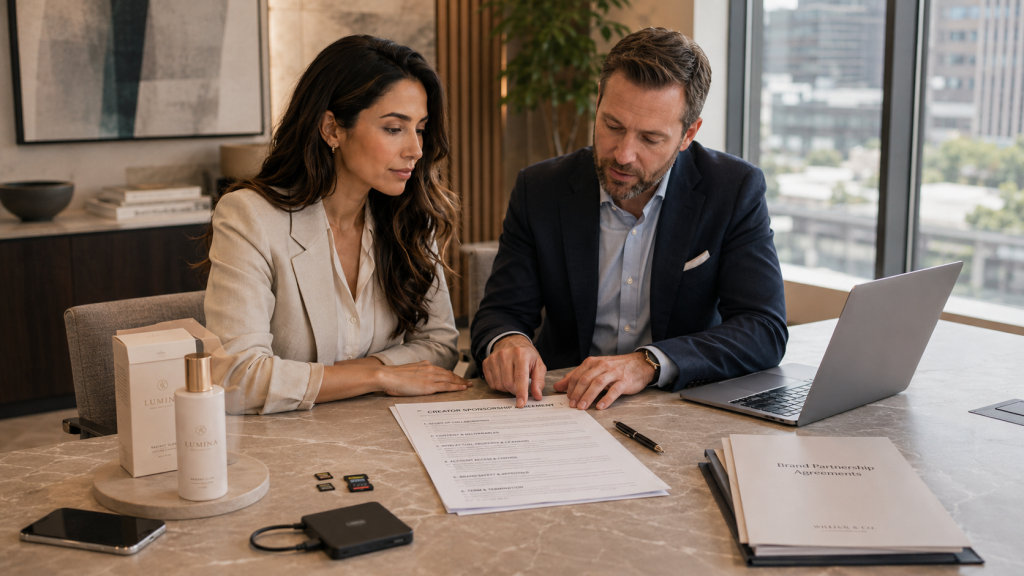
When it comes to legal advice for creators and influencers, timing matters more than anything else. Once the contract is signed, the brand name is contested, or the account is lost, options shrink fast, and costs go the other way. Building a creator business involves more than producing content. The contracts, accounts, intellectual property, sponsorships, and audience data supporting that content also need protection. If you are a creator, influencer, agency, or brand looking for legal guidance, think about contacting our firm, Joe D’Angelo Law to discuss the legal issues affecting your business.
The information provided in this blog, article, or video post is for general informational purposes only and is not intended to be legal advice. The matters discussed in this article may be complex and subject to varying interpretations and applications depending on the specific facts and circumstances, and changes in law. This post is not a substitute for professional legal advice tailored to your individual situation. No reader should act or refrain from acting on the basis of any information included in, or accessible through, this post without seeking the appropriate legal or other professional advice on the particular facts and circumstances at issue from a lawyer licensed in the recipient’s state, country, or other appropriate licensing jurisdiction. This blog post nor anything on this website shall create an attorney-client relationship.
This blog post is considered lawyer advertising. Prior results do not guarantee a similar outcome.